Tuesday, December 30, 2008

BlackBerry Bold 9000 smartphone review


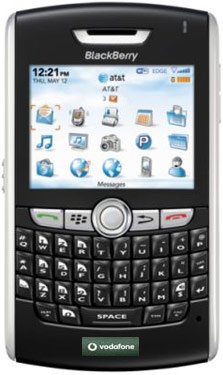
Research In Motion's first 3G internet-capable BlackBerry has landed in our sweaty little palms after months of previews and slobbering-sessions, allowing us to get all intimate on its Bold little case.With an all-new look to the operating system, it quite simply is a pleasure to use. The icons are now highly-stylised, and the extra processing power means it's super-fast to flick through the various applications. Internally, the GPS has better map rendering than some of the other models we've seen before, and it's a thrill to use with the super high-res screen, which measures 480 x 320. The screen has been placed very closely with the glass exterior, giving a very close picture and brighter, more luminous colours when watching video.YouTube videos work a treat, as the internet is super fast - in tests, it quite often eclipsed the iPhone 3G's loading times. The addition of stereo speakers means you can pester those around you with extremely loud sound, whether that's played from the MP3 player function, or video playback.RIM claims the arrangement of the qwerty keypad has been inspired by a guitar fret, with four slim silver lines separating each row of keys, which have been finely sculptured. The now-standard trackball and two buttons on either side finish off the keypad.

Storage-wise, the internal memory of 1GB could really be improved, however the microSD card slot means you can whack in an extra 16GB, perhaps to store some of the photos and video you can take with the 2.0-megapixel camera, another slight downfall.Still, the quality of the photos and video is acceptable, and the microphone seems able to pick up on a surprising amount of sound, listenable via the 3.5mm headphone jack or aforementioned stereo speakers.An absolutely stunning piece of machinery, RIM's new flagship title is bound to do well, with its ultra-premium good looks (did we mention the leatherette back? Phwroar!), and the operating system's slick new layer. This will make any heavy emailer, texter or internet browser very happy indeed.
Read rest of entry

Sunday, December 28, 2008

New HP iPhone for photo printing wirelessly


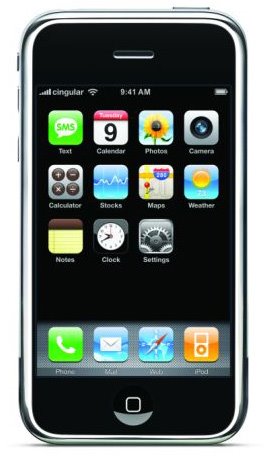
HP has launched an application that allows iPhone users to print their photos and pictures wirelessly.iPrint Photo is available to download as an application through Apple's App Store and lets users print a photo simply by touching it on their screen. Once the image is pressed an instruction to print is sent over wireless to an inkjet printer."Wireless printing is a fun extension of the iPhone/iPod touch's easy photo capture and viewing experience," said HP."Images stored on your iPhone or iPod touch can print on most HP networked inkjet printers connected to a local Wi-Fi network. Pictures will print out at a standard photo size."HP iPrint photo uses Apple's Bonjour tools to search for and identify printers, and supports Wi-Fi networks including Apple Airport, Linksys, D-Link and Netgear.
Read rest of entry

Wednesday, October 15, 2008

OLO Computer iPhone-integrated netbook concept looks unlikely

One of the regular concepts we see over at iPhoneBuzz is Apple slotting the iPhone 3G into the palm-rest of a MacBook and making it serve double-duty as connectivity and multitouch trackpad. When it’s attributed to Apple it’s pretty laughable; when a third-party claims to be doing it, as is the case with OLO Computer, you fall off the scale into hilariously unlikely.olo_computer_iphone_netbook_1OLO Computer’s concept is a netbook (with strikingly MacBook Air-style design) into which you drop your iPhone 3G whereupon it grants internet access and control. It’s unclear whether OLO envisage the iPhone powering everything - which would make the OS X screenshot on the mock-up’s display a little confusing, as that’s not the OS the iPhone runs - or if it would be a standalone device with its own software.The inevitable comparisons are being made to the ill-fated Palm Foleo and the recently-price-scythed Celio RedFly; the former didn’t make it out of the prototype stage, while the latter has required a 60-percent price cut (to just $199) in order to sell. Of course, with specs, pricing, proof-of-concept (and just about everything else we’d like to see) missing from the OLO website, color us sceptical.Remember, Apple could launch their own low-cost MacBook at the special event tomorrow morning. Join SlashGear at 10am PST, October 14th, for the full live blog: http://Live.SlashGear.com/!
Read rest of entry

Sunday, September 28, 2008

Product reviews: Home cinema systems


The latest systems have fewer, smaller speakers than previous kits. We immerse ourselves in the action on five of the best
BEST FOR: SURROUND SOUND

PIONEER LX01 £1,300.Despite having no centre speaker and just four tiny satellites plus the sub, the LX01 sounds impressive. Two drivers in each front speaker emulate the centre speaker, providing clear movie dialogue. The upscaling DVD drive gives a crisp image and records and plays almost all disc formats. There’s a 250GB hard-disk and a Freeview tuner, and HD audio is handled when you run a Blu-ray player through one of three HDMI sockets.Verdict:The very best all-in-one home cinema

BEST FOR: CLASSY DESIGN

SONY DAV-F200 £265

The F200’s glittery blue finish together with the flat speakers, wall-mountable DVD player and the sub’s slimline design make for a stylish system. In addition to USB and HDMI-in sockets, there’s a Digital Media Port that lets you connect via a cable to Sony mobile phones and MP3 players. Upscaled video is clear and detailed, and the sub adds excellent bass. Don’t expect surround sound, though, as this loud, proud system is purely 2.1.Verdict: As powerful as it is stylish
www.sony.co.ukBEST FOR: SAVING SPACE

SAMSUNG HT-X810 £360

Soundbars (long cabinets with multiple speakers), are good for minimalist home cinema, and with a wireless subwoofer and built-in DVD player the HT-X810 soundbar system mostly eliminates wiring. At 4ft long, the bar may be wider than your TV, so the wall-mounting kit is a blessing. The length helps create a 2.1 sound, and the audio, whether action soundtrack or subtle dialogue, is excellent, as is the upscaling DVD player.Verdict: A tidy system with few audio compromises.www.samsung.co.uk.BEST FOR: VIDEO iPODS

HARMAN-KARDON HS250 £650

The HS250 has a recharging iPod dock and can upscale video stored on the Apple player to 1080i as it feeds to a television via HDMI. DVD playback gives stable images with well-handled blacks and low-light detail. A big subwoofer and two small satellites produce a solid, cohesive soundscape (not full surround sound), but action movies are favoured as the powerful audio lacks refinement. Demerits are the complicated remote control and onscreen menus that are hard to navigate.Verdict: One for video downloaders.www.harman kardon.com


PHILIPS HTS6510 £250

This setup uses Philips Ambisound and claims to replicate 5.1 surround sound with just two satellite speakers and a subwoofer, emulating central and rear speakers by bouncing sound off walls. The HTS6510 works well – you feel as if you’re in a “cage” of sound, but subwoofer boom overpowers the speakers on loud soundtracks. The DVD player is a solid performer, upscaling standard video to high-definition 1080i.
Verdict: Great value for money, but not recommended for banging blockbusters
.www.philips.co.uk

JARGON BUSTER

SUBWOOFER A bass-only speaker unit, typically housing one or two large, downward-firing drivers. As subs require a large case, home-cinema systems often pack the audio amplifier into it, so keeping the DVD-playing unit slim. The bass is bounced off the floor and walls, so subwoofers are best placed in a corner.
2.1 SOUND SYSTEM A setup with a pair of satellite speakers to provide sound detail, and a subwoofer for bass. The result is usually stereo sound.5.1 SOUND SYSTEM True surround sound. For films, a central speaker relays much of the dialogue, a further four satellites circle the listener, and a subwoofer once again provides the guts. For lovers of wiring, the latest HD players now support 7.1 sound.What Hi-Fi? Sound & Vision’s Ultimate Guide to Blu-ray is out next month.
Read rest of entry

Tuesday, September 23, 2008

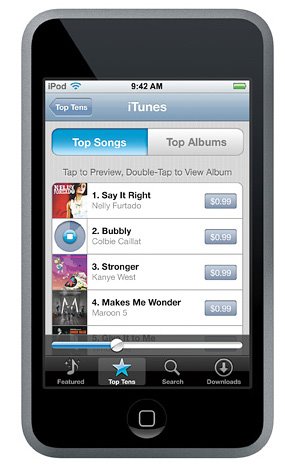
Why you should buy an iPod touch

I generally try to keep this blog on topic with posts about science news. However, every now and then I like to take a little detour into the world of gadgets (and, as the traffic to my earlier post on where to find a Wii in Vancouver suggests, such posts are popular).Like many guys, I have a bit of a weakness for the latest tech toy. As a result, I often suffer buyer's remorse after spending my hard-earned money on something that I rarely ever use (I'm talking to you fold-out Palm keyboard!). So it's been a delightful surprise that, in the months since my wife bought me an iPod Touch for my birthday, I have only become more and more convinced that it is one of the best gadgets ever made.For those who don't know, the iPod Touch is essentially an iPhone without the phone. Which may sound a bit lame except that, if you already have a cellphone -- and don't want to spend thousands of dollars on a three-year Rogers contract -- you can get almost all the things that make the iPhone so neat at a fraction of the cost.Like other iPods, the Touch is great for listening to music and -- with its sharp, wide screen -- is simply fantastic for watching movies and video clips.But what really sets it apart from all other iPods is that it has built-in WiFi. That means you can surf the Net using a special version of Safari that makes reading web pages surprisingly easy (and way better than on a BlackBerry). The WiFi also allows you to use all sorts of neat Internet-powered applications from Apple's App Store, using the Touch to check your email or keep up with your friends on Facebook.In fact, every day it seems there's a new application on Apple's App Store -- many of them free -- that opens a whole new world of cool things you can do with the iPod Touch, from playing games to checking movie times. (I might list some of my favourite Apps in a future blog post.)
In a sense, its WiFi capability makes the iPod Touch almost like a mini-laptop that you can hold in your hand. In fact, I often find it easier to pick it up at home to check my email -- or the weather, or a stock price -- than it is to boot up my computer. As a new father, I've found the Touch particular effective when one hand is occupied holding a baby -- since you can check your e-mail one-handed.The Touch's lack of cellphone capability means that, when you're out of WiFi range, you can't get on the Internet. But that's less of a problem than you might think. First, most of us spend a lot of our time either at home or at work -- both of which, for many of us, have WiFi. And finding free WiFi is getting easier and easier. Plenty of people leave their home WiFi open without a password. But even if you find that practice ethically questionable, all sorts of coffeehouses and cafes offer free WiFi to their clients -- including, now, Starbucks (as long as you have a Starbucks card).And I've saved the best for last: Earlier this month, Apple announced that it was cutting the price of its iPod Touch lines. That means the 8 gigabyte version that a few months ago was $280 is now just $250. Plus, they've added a small external speaker and a volume control knob on the side (so you don't have to fiddle with the screen to change the volume)..
Read rest of entry

Google Transit Expands to New York


A number of public officials and the founders of Google assembled at Grand Central Terminal this morning to announce the start of New York’s version of Google Transit, an online feature that they said would transform the experience of navigating New York City’s transit system, the nation’s busiest.“It is a very complicated transit system, and it just got less complicated today with the advent of Google Maps for transit,” Gov. David A. Paterson said, noting that the subway system opened with 9.1 miles of lines in 1904, and that the Metropolitan Transportation Authority now serves a territory of 5,000 square miles.The array of public officials present reflected Google’s economic might, particularly at a time when Wall Street’s convulsions have left the city and state economy reeling. Not only did the governor and leaders of the M.T.A. attend the Grand Central news conference, but so did Deputy Mayor Edward Skyler, representing the Bloomberg administration, and officials of the Port Authority of New York and New Jersey and of New Jersey Transit.“It just gives me great personal pleasure to be able to help even in a tiny way this fantastic public transportation system,” Sergey Brin, one of Google’s founders, said at the news conference. The company’s other founder, Larry Page, said he even hoped the tool would “help congestion, help the economy over all.”
Google has already presented online maps for several transit systems around the world, and several New York companies have provided similar services, like Hopstop.com, but the new Google tool has support from public officials. (The M.T.A. even posted a link to Google Transit on its Web site, along with a Google training video. And the M.T.A. allowed Google to install 10 demonstration kiosks where users can try out the new tool, until 5 p.m. today.)The tool — which encompasses the M.T.A.’s subways, buses and two commuter railroads, along with the PATH and New Jersey Transit commuter lines — appears far more sophisticated than existing online trip planners like Trips123, a site that was built with public financing.
It also seems to offer a key distinction from other, prior services: Users do not need to search specifically for transit information. Instead, they are shown transit routes, stations and stops even if are merely searching for, say, a bagel store.H. Dale Hemmerdinger, chairman of the M.T.A., said that Google Transit Maps will “reflect online what is clear on the ground: the M.T.A. is critical to the region’s mobility, economy and environment.”Elliot G. Sander, chief executive and executive director of the M.T.A., said the partnership with Google “builds upon” other customer-oriented initiatives, including real-time text alerts informing riders of “planned and unplanned service disruptions” and cellphone service in the subways.Marissa Mayer, Google’s vice president for search products and user experience, said that Google and the M.T.A. had some unexpected similarities.Both organizations are committed to “getting people where they need to be as efficiently as possible,” she said, even noting that Google has a free shuttle system that transports more than 1,000 employees on about 30 routes within 50 miles of its headquarters in Mountain View, Calif., in the San Francisco Bay Area.John Hanke, the founder of Google Earth, said the New York project started with a small group of employees who wanted to “promote the use of public transit as an alternative to people driving cars.” Google employees are allowed to spend 20 percent of their time on self-directed projects, and these employees used that time to pursue their passion for public transit, he said.Mr. Hanke said that Google had already introduced the tool for transit systems in cities like Austin, Portland, and Los Angeles, but that the truer test of the feature was whether it could also serve the world’s largest transit systems, like London, Paris, Tokyo and New York. (Google Transit covers Tokyo, but not yet London or Paris.)Tom Sly, a Google business development manager who demonstrated the new tool using a mobile devices, showed how the transit feature worked with Google’s street view tool. Google Transit plans itineraries, using transit schedules supplied by the M.T.A. to provide estimates for how long a given subway or bus ride would take.Christopher P. Boylan, the M.T.A.’s vice president for external affairs, said that the authority had made its extensive data on route schedules available to Google — but that it was available to other software developers as well. .
Read rest of entry

Google phone to cost $179, will go on sale Oct. 22

Google likes to talk about organizing the world's information and making it accessible everywhere. On Tuesday, the Internet giant took a step toward fulfilling that mission with the long-awaited debut of the first mobile phone to use its software known as Android.The phone, which will go on sale at T-Mobile on Oct. 22 for $179 — $20 less than the iPhone — closely resembles a T-Mobile Sidekick, with a big screen and a keyboard that slides out from underneath and contains an extra key dedicated to Internet search. The device also has WiFi capability and GPS built in.
But what is special about the device is that it is designed to function as a full-fledged personal computer running any kind of application a developer can dream up."It's just very exciting for me as a computer geek to be able to have a phone that I can play with and modify and innovate upon just like I have with computers in the past," Google co-founder Sergey Brin said at a news conference Tuesday in New York. Brin joked that the first application he wrote took advantage of the phone's accelerometer and measured how long it took for him to catch the phone, or for it to hit the ground, after it was thrown up in the air.Andy Rubin, Google's senior director of mobile platforms, said the source code for the phone would be released on the Internet as soon as the phone goes on sale. Though the software is basically complete, Rubin said Google will continue Advertisement to add features and functionality and that third-party developers would also be able to contribute changes. "It is future-proof because it has openness built in," Rubin said.The G1 comes with maps, e-mail and instant messaging, a music player and a camera. Users can also download applications that measure their carbon footprint or scan barcodes in a store so they can comparison-shop on the Internet.
Ten years from now the end result will be powerful devices that are tailored to the personal preferences of their owners. "Your phone will be smart about your situation and alert you when something needs your attention," Rubin wrote in a blog post last week as he prepared for the launch."I think people will be happier with the G1 than they are with the iPhone," said John Bruggeman, chief marketing officer of Wind River, which is working with manufacturers to adapt Google's code to new phones and other devices."Plain and simple, I will be able to get more applications more easily from a broader set of options.''Apple has shown that ordinary people are eager to experiment with games and productivity applications that run on a mobile device. Since it launched its App Store in July, users have downloaded more than 100 million applications for the iPhone and the iPod touch.
There are more than 3,000 iPhone applications available — but that is a fraction of the 200,000 submitted to Apple. The Android Market will theoretically be more open to developers."If it can truly be that anyone can publish whatever they want, that's a paradigm change in itself," said Gerry Purdy, chief analyst for Frost & Sullivan. Purdy acknowledged that the new phone's security will be a major issue.
Tim Westergren, chief strategy officer of Pandora, a popular music discovery service, said he is "most definitely" considering developing an application for Android. Pandora is one of the top apps offered in the iPhone store.Cole Brodman, T-Mobile's chief technology officer, said the G1 will be advertised through "the biggest marketing campaign we've ever launched for a mobile device."Brodman said T-Mobile also announced two new plans: It will cost $25 a month for unlimited Web searching and $35 a month for unlimited Web searching and messaging. Using the phone to talk will cost extra. Similar to the iPhone, the G1 will not be able to be used as a modem for a personal computer.The phone will be able to run on T-Mobile's new 3G network, which is in the process of being installed throughout the country. Brodman said the new network, which is much faster, will be available in 22 markets by October.T-Mobile, a unit of Deutsche Telekom, Google and HTC, which manufactured the phone, are hoping the G1 will have the same mass appeal as the iPhone, but at a lower cost.Google intends for this to be the first of many so-called "gPhones," making its Android software as ubiquitous as Microsoft's operating system. The next gPhone is expected from Sprint Nextel.Still, it's not clear that Google will be successful. Jake Seid, managing director of Lightspeed Venture Partners, noted that the idea of a standard technology platform has been tried multiple times in the past. In 1998, mobile industry leaders tried to come together around the Symbian operating system, partly out of concern that Microsoft would come to dominate mobile devices the same way it dominated personal computers.Seid said such efforts face a common challenge in keeping a uniform code base."Being open doesn't matter," he said. "If you look at what has been successful, it has been end-to-end control."
.
Read rest of entry
Newer Posts Older Posts

Home
 

Recommended Gadget

  • ads
  • ads
  • ads
  • ads

Techo Bee Copyright © 2009 Gadget Blog is Designed by Ipietoon Sponsored by Online Business Journal