Friday, September 4, 2009

The Zune as we know it is gone; long live the Zune HD


The Zune as we know it is going the way of the dodo, and its replacement is of course the Zune HD. "As you know, the new Zune HD device—featuring a touch OLED screen, HD Radio, HD video out capabilities, Internet browser and more—is available for preorder now and will be available at retail on September 15," a Microsoft spokesperson told Ars. "Additional flash Zune devices (Zune 4GB, 8GB and 16GB) and hard drive devices (80GB and 120GB) will continue to be available at retail until sold out, though we will not continue to manufacture those devices."

The spokesperson also touted Microsoft's upcoming Zune software and service and the arrival of Zune video on Xbox Live this autumn. The software giant intends to provide a "great entertainment experience through software and services across multiple screens and devices."

When Ars asked if the Zune 4.0 software would be available for the old Zunes, the Microsoft spokesperson said "yes" and also noted that more details about updates to the software will be revealed soon. In terms of firmware for the old Zunes, Ars was told that Microsoft "will also continue to provide updates for previous devices as they are needed for stability."

The SuperSite Blog was first to break the news, reporting that all of the current Zunes are being discontinued. The fate of the smaller Zunes was sealed when Microsoft officially detailed the Zune HD in May 2009. In August 2009, the Flash-based Zunes (Zune 4, Zune 8, and Zune 16) disappeared from the Zune Store and Zune Originals, leaving only the HDD-based Zune 80 and Zune 120. Naturally, suspicions were raised to sky-high levels. The store still looks as it did last month, but now we know that it's worse than just the Flash-based Zunes being discontinued; all Zunes will be gone once the stock runs out.

This is a very risky move on Microsoft's part. We learned in August 2009 that the 16GB version will be priced at $220 and the 32GB will go for $290. What if someone wants more than 32GB? Sure, there's a rumored 64GB version coming later, but some users want even more than that. What if someone wants a Zune but doesn't want to spend more than $200? What if they want a smaller device, both in size and capacity?

Recall that the original Zune 30GB is considered first generation, that the Zune 4, Zune 8, and Zune 80 are considered second generation, and that the Zune 16 and Zune 120 are considered third generation. When the Zune 30 was discontinued, some consumers were unhappy, but they couldn't get very vocal because there was a mere $20 difference between the Zune 16 and Zune 80. Discontinuing the Zune 30 made sense.

This time around, however, Microsoft's strategy is questionable. We all knew that hard drive-based media players would be phased out sooner or later, and it's completely possible that a 128GB version of the Zune HD, possibly a second-generation, will see the light of day eventually. The move is understandable on the right side of the spectrum. On the lower end though, it's not as clear as to what Microsoft is going for. A Zune HD that is smaller and cheaper than the 16GB simply won't cut it for the sake of the touchscreen and the accompanying apps. Also, Microsoft might simply think that 4GB and 8GB sizes will no longer be wanted in a few months (those who like to run with small MP3 players will of course disagree). Finally, it may be simply that Microsoft just doesn't want to keep supporting the Zune in its current form and that it sees the Zune HD as a much more profitable beast.

The Zune HD has a lot of potential, but Microsoft has significantly slimmed down the Zune's potential market—especially with its biggest competitor, Apple, selling audio players in sizes ranging from 4GB to 120GB. Microsoft believes it's making a precise surgical slice, but it may just be shooting itself in the foot by giving would-be Zune owners fewer choices.


submit to reddit Add to Mixx! Stumble Upon Toolbarauthority
Read rest of entry

Get Windows 7 for free by hosting a launch party (Updated)

Microsoft is finally going to take advantage of the best form of advertising for the next release of Windows: word of mouth. The world's largest software maker has partnered with House Party, apparently the world's leading party organizer, to encourage technology enthusiasts to throw Windows 7 launch parties in their communities between October 22 and October 29.

Microsoft won't let just anyone host such a party though; the company is being very selective. If you're interested in becoming an official host, there's an application process you'll have to go through over at houseparty.com/windows7. Furthermore, the offer is only open to residents of 12 countries: Australia, Italy, Canada, Japan, Mexico, France, Spain, Germany, the US, Hong Kong, the UK, and India.

Chosen hosts around the world will be among the first to see, use, and share Windows 7 with their friends, says Microsoft. If you're selected as a host, you'll receive a special Signature Edition of Windows 7 Ultimate. You'll also get a Windows 7 Party Pack to share with your guests, based on one out of four themes that you choose from: PhotoPalooza, Media Mania, Setting up with Ease, or Family Friendly Fun. Party packs will be delivered by October 10, 2009.

* All hosts will receive:
o One limited Signature Edition Windows 7 Ultimate
o One Deck of Playing Cards with Windows 7 Desktop Design
o One Puzzle with Windows 7 Desktop Design
o One Poster with Windows 7 Desktop Design
o Ten Tote Bags with Windows 7 Desktop Design for hosts and guests
* Also included in USA party packs:
o One package of streamers for decoration
o One package of balloons for decoration
o One table top centerpiece for decoration
o One package of Windows 7 napkins

US residents will also be entered for a chance to win a $750 mini-notebook computer. A total of 64 winners will be notified once all the parties are over (after October 30, 2009).

The first step of the application process is simple: you have to tell Microsoft about yourself, how the company can contact you, where to send the Party Pack, and finally pick a screen name and password (for checking the status of your application). After that, you have to confirm that "by applying for a host spot, you are agreeing to conduct yourself in the spirit of House Party—sharing a product you love with the people you love, through an experience that is fun, free, and exclusive" and that you will abide to five rules:

1. Submit only one application per household (per party)
2. Answer all questions accurately
3. Plan and host the best party you can
4. Share your party package with your guests, as intended
5. Not attempt to obtain extra party packages

Once you've agreed to all that, you have to answer six more questions (are you really surprised there are seven in total?). One of the questions of the survey is worth noting as it asks the participant what they are willing to do for the party. As such, it's clear what Microsoft will ask from party hosts:

* Host a party on any day between October 22 through October 29th, featuring Windows 7 Ultimate Operating System
* Invite at least 10 guests to join you
* Use a free party website to plan your party, invite guests, upload photos, read and post to a party blog, etc.
* Fill out an online survey after the party has happened

The second last step is to confirm a legal agreement, and then bam, you'll get a confirmation e-mail. You must then finalize the application by clicking a link. Now the rest is up to Microsoft and all you have left to do is frequently check the status of your application.

Microsoft has not disclosed how many hosts it plans to pick, but the website does insist that "host spaces are very limited." If this is the type of party you want to host, then by all means, hurry up and apply!

Microsoft CEO Steve Ballmer will be kicking off the official Windows 7 launch at an event in New York City on October 22, 2009, the day of Windows 7's general availability. It looks like Microsoft wants to turn what is normally a single launch day, into a launch week. Since the beginning of 2009, the media has been praising Windows 7, and Redmond obviously wants to keep that momentum going strong.

submit to reddit Add to Mixx! Stumble Upon Toolbarauthority
Read rest of entry

Nokia "evolves" away from Internet Tablets with new N900


It's turning out to be a busy week for Nokia. Days in advance of NokiaWorld in Stuttgart, and a couple of days after lifting the curtain on its first netbook, Nokia has announced the Nokia N900, the successor to its almost four-year-old lineup of Internet Tablets.

The N900 follows in the footsteps of the N810 with its slide out keyboard, but adds for the first time built-in 3G (Nokia calls it 3.5G) functionality, making the N900 the first Nokia tablet with the ability to go online without a WiFi connection or cellphone pairing. It's also the first Nokia device to run Maemo 5, Nokia's homegrown Linux distro.

As one might expect, Nokia has also upgraded the hardware inside the N900. It's now powered by a 600MHz ARM-based OMAP processor (compared to the N810's 400MHz CPU), supports OpenGL 3D graphics acceleration, and has 32GB of internal storage (expandable to 48GB via a microSD card). Like the N810 (and N800 with a Bluetooth add-on), the N900 also functions as a GPS. Nokia has also upped the ante on the camera with a 5-megapixel sensor and dual LED flash. Nokia has kept the 800x480 pixel resolution but has shrunk the touch-sensitive display from 4.13" to 3.5", making it one of the highest-resolution handhelds available.
n900_phone.jpg

Nokia has changed the branding on the N900, dropping the "Internet Tablet" identifier that has been present since the launch of the 770 in December 2005. The Finnish hardware giant is instead touting the N900 as an evolution from the "previous generation" of tablet devices. From the looks of it, the N900 falls squarely into the Mobile Internet Device (MID) category, but the device's quadband EDGE/WCDMA/GPRS radio means that it should be able to function on most cellular networks as a vanilla cellphone, as the Nokia product shot at right shows.

On the software front, the N900 ships with built-in Flash support (take that, Apple), its own Mozilla-based Maemo Browser, as well as the usual contacts, e-mail, calendar, and media player apps seen on earlier versions. It can handle all the popular audio and video formats, too (with the obvious exception of DRMed iTunes content).

When the first Internet Tablet hit the market in December 2005, it was a revelation with its built-in WiFi, Linux OS, full-featured Opera browser, and 4.2" 800x480 touchscreen display. Each succeeding iteration of the Internet Tablet family has been a significant upgrade from the previous model, but the competitive landscape has changed even faster. The N900 is an impressive-looking piece of hardware, but it finds itself swimming in a sea of iPhones, BlackBerrys, and Android devices (and maybe, someday, some Atom-powered mobile Internet devices). With the announcement of the N900 and the Nokia Booklet 3G (rumored to be priced in the $800 range), Nokia has shown that it is interested in being a part of the MID and netbook conversations.

The N900 will carry a retail price of €500 before subsidies and will launch in "select markets" in October. No word on US pricing or availability yet.

submit to reddit Add to Mixx! Stumble Upon Toolbarauthority
Read rest of entry

Unlaunched Atom-smasher shows up in Samsung X series laptops


Samsung announced its new X series of laptops this morning, and the company let a detail slip about the X120 portable that's less trivial than it may initially sound: the thin portable eschews Intel's netbook-oriented Atom line in favor of a new ultra-low-voltage (ULV) processor from Intel. The SU4100 ULV processor and its siblings will formally launch later this month and have been getting press recently under the internal Intel acronym CULV (for consumer ULV). These cheap ULV processors mark a subtle but important shift in the chipmaker's notebook strategy, and they also spell bad news for rival AMD.

Intel has been putting out ULV variants of its notebook chips for years; these parts have significantly lower power usage than their regular mobile counterparts, while keeping the same performance levels. Because of this combination of low power and high performance, they've historically commanded a significant premium over normal notebook chips, making ULV-based portables a rare, expensive, and often Japanese luxury.

The netbook craze has made it clear that there is a huge consumer appetite for the combination of small form factor and large battery life that the Atom-based machines offered, but many netbook users have been frustrated enough with Atom's anemic performance that they've actually returned the machines to the store. Anecdotally, many netbook purchasers thought they were buying a small, very cheap laptop with great battery life, only to get the device out of the box and find that you get what you pay for, performance-wise.

So going into the first part of 2009, there was a huge price and performance gap between the Atom-based netbook and its higher-end, C2D-based notebook relatives. AMD made a run at this gap with its Yukon platform, and at this past CES we handled a few netbook-like portables based on these parts. But Intel isn't going to leave this space to AMD.
Like a netbook, but way better

The ULV processors that power the upcoming Samsung X series haven't technically launched, but when they do, Intel confirmed to Ars that they will be "similar in specs" to the ULV processors that the company recently launched this past June, but cheaper.

"In general, these [upcoming ULV parts] are priced lower than those," an Intel spokesperson told Ars. "The intent was to enable those kinds of form factors, but at more mainstream price points."

In other words, notebooks powered by the new ULV line will have a netbook form factor coupled with notebook performance, at a price that puts them in between Atom-based netbook and upcoming Nehalem-based notebooks.

While the chipmaker wouldn't give us any more detail on the specs of the new chips, Samsung has spilled a few of the beans by revealing on its site that the CPU in the X120 is the as-yet-unannounced 1.3GHz Intel Pentium ULV SU4100 with 800MHz FSB and 1MB cache. Note that the normal SU9x00 series has 3MB of cache at speeds ranging from 1.2GHz to 1.6GHz, so Intel is clearly cutting back on the amount of cache in the new parts to justify the lower prices. There's little doubt that the S4100 ULV and its siblings will fit within the same 10W TDP as the existing ULV line, and enable the same form factors (~11 inch screens, between 0.8 and 1" thick) and battery life (7 hours or more), but at prices that put the resulting machines in the $600 to $1,000 range.

In all, a line of Core- and Core 2-based ULV parts aimed right at the price/performance gap between Atom and the forthcoming Nehalem mobile variant is great news for netbook users who love the netbook form factor but hate the performance enough that they would pay a roughly $200 premium for a real CPU. The new ULV parts will also make AMD's job harder, and one has to wonder if they won't hurt Atom a bit, as well.

In terms of performance, the year-old Core Solo that powers the Samsung Q1UP tablet whips Atom up and down the block, and does so in a unit that's 2lb and has a five-hour battery life. This being the case, you'll have to really want to save the $200 or so to opt for the Atom and take such a massive performance hit.

The Samsung X series doesn't have a stateside price or launch date, yet, but the UK price suggests that the X120 will be around $1,000. That's enough to put it well into "notebook" territory and out of the reach of a move-up netbook buyer, but cheaper notebooks based on the lower-end members of the upcoming ULV line (the SU4100 is definitely not at the bottom of what will be announced) should start showing up before long.
submit to reddit Add to Mixx! Stumble Upon Toolbarauthority
Read rest of entry

Background Location Finds A Loop(t)hole On The iPhone


A location-based social network is not going to truly take off on the iPhone until it can run in the background. You know it, I know it, and even Loopt, which makes such an app, knows it. That’s why they’ve done something about it.

Beginning today, Loopt is rolling out a trial for background location on the iPhone. Yes, you read that right.

If you’ve been following the iPhone at all over the past couple of years, you’re undoubtedly asking yourself how this is possible, since the device does not allow third party apps to run in the background. Has Apple changed its mind about background apps? Not yet. Instead, Loopt is partnering with other companies in the mobile industry for what it’s calling “Always-On Location Service.”

Loopt co-founders Sam Altman and Alok Deshpande would not disclose the names of any of these partners, noting that the system set up to make this happen is very “complex” and involves a number of players. But at least one of them has to be AT&T, which is, of course, the network the iPhone runs on. Loopt, which seems to be particularly good at carrier relationships, has cut deals with AT&T in the past.

What this means is that these guys have gotten around the iPhone’s limitation by keeping a pipeline open on AT&T’s side that is constantly sending your location data to Loopt. This doesn’t require any app to be running on your iPhone — not even Loopt — and the location data will be sent even when you’re on a call or surfing the web on your iPhone. Most importantly, because there is no app required to do this, it doesn’t drain your battery life, Altman tells us.

So what does Apple think about all of this? Altman refused to comment on that, but given the cordial relationship Loopt has had with Apple (being featured both at WWDC last year and in an iPhone commercial), it seems likely that the two sides at least talked about this before Loopt pulled the trigger. That said, because no application is actually involved in this process, it looks like Loopt has essentially found a loophole around Apple on this one.

Privacy will undoubtedly be a major concern with such a feature. But Altman notes that you have to go to a website to actually sign up for this, and you can turn it off or on at anytime on that site or via an SMS message. And he believes some of privacy concerns will fade as people get used to such services. “The future of location-based services is always-on,” he says.

looptI agree, this seems like a huge win for Loopt (well, if users are okay with paying for the service, more on that below). I’ll be using it a lot more now because first of all, I don’t actually have to open the app to update — but more importantly, none of my contacts will either. So oddly, I probably will be opening the app itself more now too because of that. And eventually, you could see such background location functionality playing a roll in advertising on the iPhone.

They way this will work is that you will be able to receive alerts (emails or text messages) when people or places of interest are nearby to your current location. Loopt can also now build what it calls a “Life Graph” for you — basically, keep a log of where you’ve been. Again, this will be opt-in.

Altman would not comment on if its competitors like Whrrl or Brightkite could also strike similar deals, but Deshpande confirms that no one else is offering this (at least not yet). And Loopt is getting ready to come out with a version 2.0 of its iPhone app that should take on other competitors like Foursquare.

As it seems clear that AT&T is the key factor in making something like this happen, it’s nice to see them doing something innovative to actually help their iPhone customers get a feature that many of us have long wanted. Assuming it works well, it might even be enough to make us forget the whole months-late MMS thing.

But this good news has a price. $3.99 a month, to be specific, which users can sign up for on this site. Initially, Loopt is going to limit the trial to 5,000 testers.
submit to reddit Add to Mixx! Stumble Upon Toolbarauthority
Read rest of entry

Tuesday, September 1, 2009

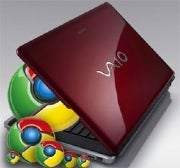
Sony Adds a Little Chrome to the VAIO


If you buy a new Sony VAIO computer, you're going to get a new browser. No, Internet Explorer isn't going anywhere. But Financial Times is reporting that Sony has signed a deal to preinstall Google's Chrome on its PCs. Chrome-equipped machines are making their way to customers even as we speak.

I'm not sure whether Chrome is now the defaultbrowser on new Sony computers-the FT doesn't explicitly say so, although Download Squad does-but it's an interesting development. For years, Microsoft has benefited hugely from the fact that IE is the default browser shipped on most of the world's personal computers. Some folks discover IE this way and continue to use it because they like it; many others keep on running it out of sheer inertia.

Sony is only one manufacturer, but the FT reports that Google says it's working on similar arrangements with other companies. What if it were able to strike deals with, say, HP, Dell, and Acer? Maybe by cutting them in on the advertising revenue it gets from searches performed with Chrome's toolbar and default homepage?

For a browser that's nearly a year old and which is backed by the most powerful company on the Web, Chrome has failed to catch show explosive growth-Ars Technica says that around two or three percent of Internet users run it. (The Technologizer community is apparently a lot fonder of Chrome than the Internet at large-about eight percent of you visit the site via Chrome.) It's still not entirely clear to me whether Google sees Chrome as a side project, a prank, or a core component of its mission. And it can't pummel IE into submission until it's caught up with Firefox (which, according to a new report, is used by more than 23% of all Internet users). But if any browser company is in a position to nudge IE out of its position as the world's default browser, it's Chrome.

Meanwhile, I kind of like the system Microsoft came up with to pacify Europe's concerns over IE: aballot screen that lets Windows 7 users pick whatever browser they prefer. Wouldn't it be cool if Chrome, Firefox, Flock, IE, Opera, Rockmelt, Safari, and any other worthwhile browser that came along all got an equal shot at being the world's most popular browser-based on quality alone?
Read rest of entry

Microsoft, Intel Build Fast, Efficient Windows 7 Machines


Microsoft has made enhancements to its upcoming Windows 7 operating system that will speed up applications on machines with Intel's multicore chips, resulting in better overall system performance and less power consumption.

Hardware hooks in Intel's new chips will help Windows 7 deliver performance gains when running applications like DVD playback compared to Windows Vista, the companies said in a joint press briefing on Tuesday. The improved performance is accompanied by more efficient power usage, as the OS makes better use of power management features included in Intel's latest chips.

Microsoft has designed the OS to scale application performance by intelligently breaking up tasks like video encoding for simultaneous execution over multiple cores and threads, the companies said. For example, a Microsoft engineer could render a high-resolution image 10 percent faster on a Windows 7 system with a quad-core processor that ran two threads per core, versus a system that ran one thread per core.

The performance improvement depends on the application and usage scenario, said Ruston Panabaker, principal program manager at Microsoft. Microsoft and Intel officials were unwilling to talk in general about overall OS performance improvement compared to Windows Vista or Windows XP. Windows 7 is due for release on Oct. 22.

Most Intel chips included in consumer PCs execute only one thread per core. However, Windows 7 users may see real performance boosts when Intel releases new laptop and desktop chips based on the Westmere microarchitecture that can execute two threads per core. The new chips -- respectively code-named Arrandale and Clarkdale for laptops and desktops -- will be in production in the fourth quarter this year. The chips will be manufactured using the advanced 32-nanometer process and could reach systems by early next year.

While improving system performance, the intelligent breakdown of tasks could also reduce power drawn by systems, said Mike Angiulo, general manager of the Windows planning and PC ecosystem. Clock speeds of each core can be reduced when tasks are distributed among cores, which makes a processor more power-efficient.

Microsoft has made some kernel changes in Windows 7 to improve the power management of cores on Intel's chips compared to previous operating systems. A demonstration showed the power drain during DVD playback on a battery-powered Windows 7 laptop of 15.63 watts, compared to a drain of 20.48 watts on a similar Windows Vista laptop. Such power savings could improve battery life of a laptop by hours, Panabaker said.

Microsoft also makes better use of a timer system that puts cores in Intel processors back into sleep mode when idle. Depending on usage, the OS can intelligently put different cores into different power states, and processors remain in idle mode for a longer period in Windows 7 compared to Windows Vista, Panabaker said.

Intel's Westmere chips will also feature new onboard instructions for AES (Advanced Encryption Standard), which gives hardware instructions to speed up encryption of data, said Mark Swearingen, director of Microsoft program office at Intel. Microsoft has added the AES instructions to the Windows API (application programming interface) so application developers can build programs using the feature.

One program that takes advantage of on-chip AES is BitLocker, a Windows 7 feature to encrypt data in a system. Typically disk encryption and AES-type functions have some CPU overhead and new instructions help to reduce that overhead, Swearingen said.

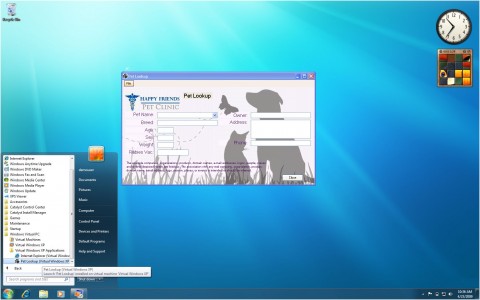
Another feature included in Windows 7 that takes advantage of Intel chips is XP Mode, an environment that allows users to run Windows XP-compatible programs. The technology uses Intel's on-chip virtualization technology, and it is particularly useful for small businesses that need a safety net to run legacy applications. This feature is also supported on AMD's AMD-V virtualization technology, which comes with most AMD chips.

Microsoft's Angiulo said the software maker took a different development approach during Windows 7 to better tune it to the latest hardware. Instead of delivering a beta of an OS with potential ideas like in the past, Microsoft tried to deliver an OS that was close to a complete version. The feedback from beta testers helped prioritize engineering ideas, which helped improve the OS with relation to system performance and power management.

It is also the first time Microsoft hasn't doubled system requirements for Windows with a new release, Angiulo said. The Windows XP to Windows Vista upgrade in 2007 required users to have faster processors and more memory, but Windows 7 can run on hardware from netbooks to servers, he said. The company also worked with other hardware and software partners to ensure compatible software and drivers were available at the launch of Windows 7.

For example, Windows 7 will support a new API called DirectX 11, which breaks up tasks over multiple CPUs and graphics processing units for better graphics and multimedia performance. The software giant is working with top graphics chip makers Nvidia and Advanced Micro Devices on those features.

Microsoft isn't the only company to make hardware-related improvements to boost OS performance. Apple has changed the basic architecture of its Mac OS X 10.6 OS, also known as Snow Leopard, by enhancements that allow the OS to divvy up tasks for simultaneous execution across multiple CPU and GPU cores.
Read rest of entry
Newer Posts Older Posts

Home
 

Recommended Gadget

  • ads
  • ads
  • ads
  • ads

Techo Bee Copyright © 2009 Gadget Blog is Designed by Ipietoon Sponsored by Online Business Journal